
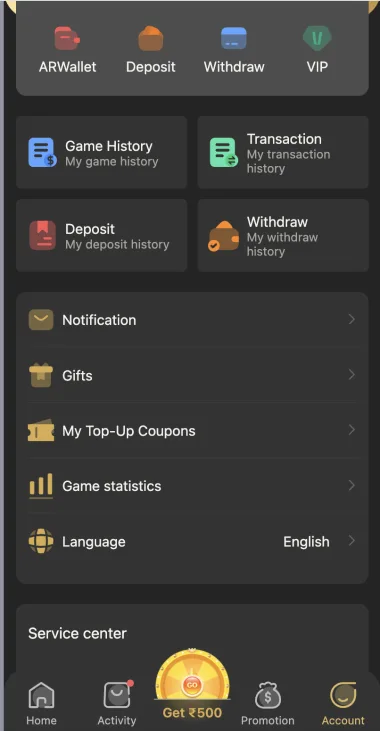
Start by defining the history you are reading
An account history, a bank statement and a payment-app list are different records. The account history describes events recorded by the service. The bank statement describes movements and entries held by the bank. The payment app may show its own transaction details and complaint information. None should be silently substituted for another.
Write the source at the top of any saved record. Include the account or service identifier in a private note without exposing a password. If a page has separate deposit, withdrawal, bonus or adjustment tabs, record which tab you used. A list from one tab may not represent every movement affecting the total account balance.
This distinction becomes important when someone says a transaction is missing. Missing from which record, during which period and under which filter? A precise answer can reveal that the entry is in a different category rather than absent altogether. It can also show a real discrepancy that needs explanation. Define the scope before drawing a conclusion about the entire account.
Record dates with their meaning intact
A transaction can have a request date, a processing date and a later update date. A bank may also show a posting date that differs from the time of the original action. Do not assume every timestamp describes the same event. Keep the label attached to the value.
Use one time zone in your own summary and preserve the original displayed times alongside it where necessary. If a source does not name a time zone, say that it is unspecified. Do not invent precision by converting a value whose meaning you do not know. A date near midnight can appear to differ by a day without necessarily referring to a different transaction.
For a support enquiry, explain which date you mean. The day you noticed the problem is not automatically the payment date. The time a screenshot was saved is not automatically the time an order was created. Keeping those distinctions clear helps another person locate the right record and avoids an investigation being limited to the wrong period.
Understand identifiers before copying them
A history page may contain an order ID, request ID, transaction reference and complaint number. They may all use long strings and look similar. Label each according to the source. If the page does not explain a field, quote the label rather than guessing that it is a bank reference.
Copy identifiers carefully and preserve leading zeroes where present. A spreadsheet can sometimes reinterpret a long identifier as a number or display it in a shortened form. Treat reference fields as text in your own records. After copying, compare the value with the original before sending it to support.
A useful private index can link each account entry to its bank record and complaint reference. That index should not imply a match you have not established. If two candidate payments have the same amount, keep both until the date and identifiers resolve the ambiguity. An uncertain match is better marked uncertain than forced into a tidy but inaccurate table.
Filters can change what appears to be missing
Date ranges, categories and status filters can hide entries from a history view. Before concluding that a record disappeared, note the active filters. A default range might show only recent activity, while a status selection might exclude failed or cancelled requests. The interface may also load additional pages separately.
Change filters carefully and record the range you checked. Avoid creating new activity while searching. If the page provides pagination or a load-more control, distinguish it from a button that starts another request. A partial list is not necessarily a complete account history.
If you still cannot find an entry, describe the search scope in your enquiry: the date range, category and identifier you checked. This is stronger than saying history is empty. It tells support whether the problem may concern a filter, a missing category or a particular record. If the service can provide an official account statement, ask what period and types of entry it includes before assuming it resolves every question.
Read debit and credit from the source perspective
Debit and credit can be confusing because the perspective changes between systems. An outgoing bank payment and an incoming account credit may describe opposite sides of one intended movement. A withdrawal request may reduce an internal amount before a bank credit exists. The words alone do not explain the complete sequence.
In your notes, use plain direction labels alongside the source wording. For example, bank money out, account credit recorded or expected bank money in. Keep the original debit or credit label as well. This makes the table readable without altering the source record.
Do not add an account credit and a bank debit together as if they were two independent payments. They may relate to one event. Equally, do not cancel them out without establishing the link. Reconciliation means matching the records through date, amount and reference, not merely arranging positive and negative numbers until the total looks plausible.
Keep reversals and adjustments separate from the original entry
A reversal is a later record that may relate to an earlier movement. An adjustment can describe a change made within an account ledger. The exact meaning depends on the source. Keep the original event and the later entry as separate rows, with a note explaining the claimed relationship.
Ask for the reference connecting them if it is not clear. A bank credit described as a return should be matched to the original debit through evidence, not assumed from a similar amount. An internal adjustment should have an explanation of the category and calculation involved.
Do not overwrite an earlier amount with the final net value. Doing so can hide the sequence needed to understand a complaint. A clear record shows what was initially entered, what changed and why. If an organisation says the issue is resolved by an adjustment, ask which entries demonstrate that result. The answer should allow you to follow the numbers without taking a vague assurance on trust.
Distinguish duplicate entries from separate attempts
Two rows with the same amount can represent separate attempts, a repeated display or two stages of one event. Compare identifiers and dates before deciding. A duplicate-looking row is a question to investigate, not immediate proof of a duplicate bank debit.
If you made several attempts, number them privately and preserve each source record. Include attempts that produced no debit if they help explain why several account orders exist. Do not combine them into one total until the individual records remain available underneath it.
If only one bank debit exists but two account rows appear, ask how the account rows relate. If two bank debits exist, retain both references and ask each responsible organisation about the specific entries. A support message that says double payment without the identifiers can be difficult to investigate. A short table showing the two bank references and corresponding account entries is clearer and reduces the risk of the wrong row being marked resolved.
A balance is a summary, not the whole history
A balance can be useful for noticing a change, but it does not explain every component behind the number. It may include categories with different definitions. A summary figure can also be viewed at a different moment from the detailed history. Do not assume the difference is understood merely because the total looks familiar.
To investigate a mismatch, identify the opening point, the entries in the relevant period and the closing point. Keep category definitions with the calculation. If an amount is restricted or promotional, do not silently treat it as equivalent to an unrestricted cash amount. Ask the service to explain the labels.
Do not invent a full accounting formula for an interface whose rules you have not verified. A private reconciliation can show which entries you matched and which remain unexplained. The responsible organisation should clarify the rest. The goal is a transparent account of the uncertainty, not a spreadsheet that appears precise because it fills every missing field with an assumption.
Match an account entry to a bank transaction
Use several fields together: date, amount, recipient or sender and reference. A matching amount is a starting point, not a complete match. This is especially important when preset amounts repeat across several attempts or when a bank entry appears on a different posting date.
Keep the bank's original wording and ask the bank to explain unfamiliar fields. A recipient name that differs from the brand should not be silently renamed in your table. Record the name as displayed and ask the account service to explain the relationship if it matters to the issue.
When the match is clear, link the two rows in your private notes. When it is not, mark what remains missing. This helps you ask a precise question: which bank reference corresponds to this order, or which account entry relates to this debit? It is more useful than forwarding an entire statement and hoping the recipient identifies the intended transaction.
Build a compact private record
A practical record can contain columns for source, date, amount, identifier, status and related complaint. Add a notes column for the unresolved question. Keep the original files in a private folder and use the table as an index. The index is a convenience, not a replacement for source evidence.
Use descriptive filenames that do not expose unnecessary personal details. A date and short issue label are usually enough for your own organisation. Avoid putting a full phone number, bank account number or identity number in a filename that may later be shared accidentally.
Retain dated versions when a status changes. You do not need many identical copies, but you do need enough to show a meaningful change. If you correct a transcription error in your table, note the correction rather than altering the original evidence. This makes the file easier to trust if you revisit it months later or share a relevant excerpt with an authorised investigator.
Share a redacted copy rather than your whole financial life
A useful complaint may need a date, amount, reference and status. It rarely needs unrelated transactions, available balances or personal notifications. Create a copy that retains the relevant information while hiding the rest. Keep the private original separately in case an official secure process later requires it.
Review images and documents before sending. A full-page capture can include more than the visible issue, including browser tabs, another account identifier or a token in an address. A statement can reveal recurring payments and personal relationships unrelated to the complaint. Minimise the shared material without changing the facts it needs to establish.
Do not post private records in a large group to obtain a quicker answer. Other members may download or forward them. If a verified institution requests a full document, use its authenticated submission route and keep a note of the recipient. A record designed to help one enquiry should not become a permanent public history of your finances.
Use history to write a focused support question
Start with the discrepancy your records show. You might have one bank debit and no matching account credit, a request marked paid with no traceable transfer reference or a rejection with no explanation of the resulting amount. State that mismatch in one sentence before attaching evidence.
Include the relevant identifiers with their labels. Ask for the specific missing fact rather than requesting a general account check. If the response provides a new reference or status, add it to the same record and ask how it connects to the earlier entry if that is not obvious.
Keep the complaint acknowledgement and the final response. If you follow up, quote the existing reference and identify the question still unanswered. A history file is most useful when it supports a clear enquiry. It is less useful when it becomes an attachment collection with no explanation of what the reviewer is expected to establish.
Do not erase evidence while troubleshooting the app
An app problem may tempt you to clear storage or reinstall immediately. Preserve important records first. Android Help distinguishes clearing cache from clearing storage: cache concerns temporary data, while clearing storage removes app data on the device. The exact settings can vary by device.
That device action is separate from an external account's records. Removing a local copy does not establish that a bank transaction or a server-side account entry was deleted. Conversely, do not assume a local screenshot will remain available after you clear files or remove an app.
If you need to troubleshoot, keep a private copy of the relevant history and note the app or browser version where useful. Do not install an unknown replacement package from a group simply because someone says it restores history. An access problem and a record dispute can be handled as separate tasks. You can retain bank evidence and complaint references even if the account interface is temporarily unavailable.
Read a complaint closure against the records
A case can be marked closed while the history still needs interpretation. Read the closure reason and compare it with the original question. Does it identify a matching credit, a reversal, a ledger adjustment or another evidenced outcome? A closed label is not a substitute for that explanation.
If the response is incomplete, preserve it and use the relevant published follow-up route. State the remaining mismatch with the same identifiers. If the response resolves the issue, note which record supports that conclusion and the date you checked it.
Do not retain every duplicate attachment indefinitely, particularly when copies expose sensitive information in messaging apps. Keep a concise secure evidence file and remove unnecessary shared duplicates where you can. The aim is a record you can understand and control, not a growing pile of private documents scattered across devices and public links.
Know the limits of this article and its publisher
BDG Win APK cannot access your account history or bank records. Rohit Kumar can receive corrections about this article at [email protected], but we cannot issue a transaction statement, change a ledger or certify a private payment. Those tasks belong to the organisation responsible for the record.
For a correction, send the page address and the wording that needs attention. A cropped example of a changed label may help, with personal details removed. Do not send a password, full bank statement or identity document to the publisher.
Related articles have separate purposes. The pending-payment page explains unresolved states, the rejected-withdrawal page explains decision-review questions and the deposit page explains missing credits. Use the history as a shared factual foundation across those issues. A well-kept record helps you ask better questions without turning an existing problem into a reason to create new transactions or disclose more information than necessary.
Frequently asked questions
Is account history the same as a bank statement?
No. They describe records held by different organisations. Match relevant entries through dates, amounts and identifiers rather than treating them as interchangeable.
Why can two entries show the same amount?
They may be separate attempts, different stages or a repeated display. Compare identifiers and dates before deciding whether there is a duplicate payment.
Should I rename a bank reference as an order ID?
No. Keep each identifier labelled according to its source. A bank reference and an account order ID serve different purposes.
Does a balance prove every transaction is correct?
No. It is a summary. The underlying entries and category definitions are needed to explain a specific discrepancy.
Should I clear app storage before saving history?
Preserve important records first. Device storage actions can remove local data and are separate from the external account and bank records.
Can I send my full statement to the publisher?
Do not send private financial records to us. For editorial corrections, provide the page address and a concise explanation with personal details removed.