
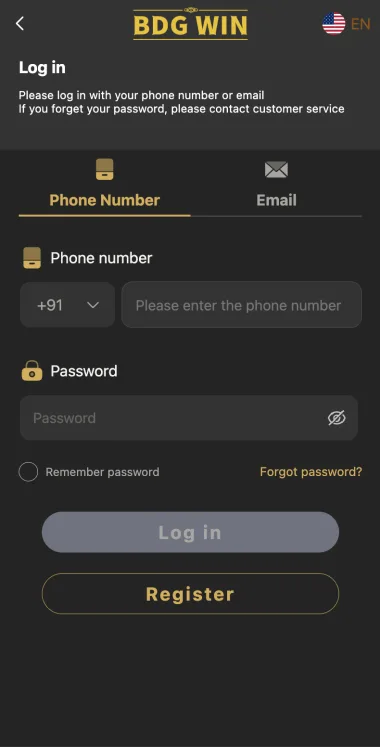
Identify the action behind the request
Read the current page and identify whether the code is for registration, password recovery, login or another account action. The purpose matters because a message for one action should not be entered into an unrelated flow. If you did not request any action, treat the message differently from a delayed response to a deliberate request. Do not follow a link simply because the brand name is familiar.
Note the time of your request and the destination address. The external login link used by our website is https://bdgwin45.com/#/login. We cannot inspect the provider's message delivery system or confirm whether a particular request was accepted. A clear timeline helps distinguish a request that never completed from a message that was generated but delayed or filtered elsewhere.
If the page failed before displaying any confirmation, do not assume a code was definitely sent. Preserve the wording and read whether the form identified an error. A phone format issue, a missing field and a delivery issue need different responses. The first useful question is what the provider said happened, rather than how many times the button can be pressed.
Confirm the destination belongs to the account
If the form displays a masked number or email, compare the visible portion with the contact method you intended. A wrong destination makes waiting pointless. It can indicate a typing error, an outdated account detail or a different record. Stop requesting messages until the account identifier is clear. Do not ask someone else to forward a code from a number you do not legitimately control.
When entering the identifier yourself, inspect country-code formatting and accidental spaces. A form with +91 selected may expect the remaining digits separately. For email, read the complete address rather than relying on the browser's suggestion. An old autofill entry can silently select another identifier while the page still looks familiar. Correct the actual value before treating delivery as the problem.
If the registered contact method has been lost or changed, look for a documented ownership review. A new number or mailbox does not automatically replace the old one in the provider's record. Explain the situation through a verified route. We cannot redirect an OTP, transfer an account or approve a new recovery contact on behalf of an external provider.
Check ordinary SMS reception
Determine whether the relevant SIM can receive ordinary messages. On a dual-SIM phone, check the number connected to the account rather than the SIM currently used for mobile data. A working internet connection does not prove that both numbers can receive SMS. Keep these observations separate so that you do not troubleshoot Wi-Fi when the actual issue involves the mobile contact method.
Read the phone's message categories and filtering options using the tools already available on the device. A message may not appear in the same place as personal conversations. Do not install a new SMS-reading app or grant unrelated permissions simply to search for a code. A missing message should not become a reason to give another application broad access to private communications.
If ordinary SMS also fails, contact the relevant mobile provider through a legitimate support route. Describe the reception issue without providing an account OTP. If ordinary messages work but the provider code does not arrive, preserve that distinction. It may help the account provider assess the request, although it does not by itself establish which part of the delivery chain is responsible.
Check email delivery if that is the selected route
Open the mailbox associated with the account and inspect its filtered or spam folders. Look around the time of the deliberate request. Check whether the mailbox receives other new messages and whether storage or synchronisation issues are visible. A mail app can show an old inbox while the underlying account has a separate access problem. Use the mailbox provider's own tools to investigate that issue.
Verify the sender and destination before using a reset link. A message arriving near a genuine request can still be unrelated or suspicious. If it leads to an unexpected domain, return to the account page through a route you open independently. NIST's phishing guidance supports checking a request through known contact information rather than trusting the details contained in the message itself.
If the mailbox appears compromised, secure it through its own provider. A password reset for the gaming account does not fix an attacker-controlled forwarding rule or a lost email password. The mailbox may be the recovery path for several services, so its security matters independently. Do not forward a full recovery message to a stranger who offers to inspect it for you.
Respect the current resend instruction
Read any visible waiting or resend instruction before requesting another message. We do not promise a specific delivery time, retry limit or code lifetime for the provider. Those details can depend on the current process. A timing rule from another website or an old article should not override the instructions attached to the attempt you are actually making.
Several rapid requests can leave multiple codes arriving in an unclear order. You may then enter an older code into a newer flow and misdiagnose rejection as another delivery failure. Keep one deliberate request at a time where possible, and follow the provider's explanation of which message applies. Do not assume that every earlier code remains usable after a resend.
If a restriction appears after repeated attempts, pause and keep its wording. Switching between devices, identifiers and networks to evade it does not explain the cause. Ask the provider about a documented next step if needed. A support request should state that a resend or waiting condition appeared, not hide that detail and begin another sequence of unexplained attempts.
A late code may belong to an earlier attempt
When a message arrives after a delay, compare its purpose and timing with the current page. If you have already started another action, the message may no longer match the active flow. Do not enter it everywhere until something works. Read the provider's current instructions and avoid assuming that an OTP for registration can approve a password reset or another unrelated request.
If the message does not clearly identify the action, treat that uncertainty carefully. Do not ask a public group to interpret an unredacted code. You can describe the wording without revealing its private value. If a verified support route is available, ask how to identify the relevant request. Preserve the error and timing rather than sharing the credential itself as proof.
Once an action succeeds, stop requesting more codes for it. Further unexpected messages should be examined as new events. They may relate to earlier requests, another person's mistake or suspicious activity. Do not automatically repeat the completed process because another message arrived. Check the account through an independently opened route if the activity does not match your own actions.
If the code arrives but is rejected
Check the value for a copying mistake or accidental space. Confirm that it belongs to the current action and identifier. If several messages arrived, do not assume the first one remains valid. We cannot verify the provider's lifetime or invalidation rules. Follow the current page and any message instructions rather than a guessed number of minutes quoted by a contact.
If careful entry still produces an error, record the exact wording and time. Do not send the code to support as part of the evidence. A description saying that a newly requested code was rejected is enough to begin the conversation. A redacted image can show the error without giving another person information that may still authorise access.
Do not change the phone clock, install an unknown APK or make a transfer because a private message claims that it repairs verification. Those steps do not establish why the code failed. Ask for the provider's documented alternative if the normal process remains unusable. Pausing is safer than turning a narrow verification problem into several unverified changes to the device and account.
Lost SIM, old number or unavailable mailbox
If the phone was lost but the number remains yours, contact the mobile provider about securing the SIM and restoring legitimate access. Use the device manufacturer's own lost-device tools where appropriate. Protecting the contact method is the immediate task. A stranger in a Telegram group cannot establish ownership of the missing device or replace the provider's recovery process for you.
If the number has been permanently reassigned or the mailbox is no longer recoverable, tell the account provider that the original destination is unavailable. Ask what ownership review exists and how to submit the minimum necessary evidence securely. Do not ask a new holder of an old number to forward private codes. Their access to a message does not make an informal transfer appropriate.
There may not be an instant self-service solution. We cannot guarantee a new recovery route or tell the provider to accept another contact method. Keep the request and response in writing. A clear limitation is more useful than a promise from an unverified contact who says every account can be recovered for a fee or through a replacement invitation link.
Keep OTPs separate from referral information
The invitation code linked by our website is 4398516845588. It is public referral information, not the private code sent to approve an account action. Do not confuse the two because both are called codes. An invitation issue can be discussed without revealing an OTP, password or reset link. A referral contact does not need authentication credentials to explain the public invitation value.
If someone says they need an OTP to credit a referral or activate a promotion, stop and verify the claim independently. A commercial tracking question should not automatically require surrendering account access. Ask what action the code would approve and where the requirement is documented. Do not rely on a familiar profile name as proof that the request is authorised.
A missing OTP also does not imply that another invitation is required. Changing a referral number does not address SMS reception, a mistyped email or a lost SIM. Keep the category of the problem clear. Each unnecessary change adds uncertainty and may create a second account rather than helping the original verification request reach its intended destination.
Beware of help that asks for control of the device
Do not grant remote access merely because a person says they can make the message arrive. Remote control can expose unrelated mailboxes, banking apps and private information. A code-delivery issue should be described through limited facts first. An unknown person does not need to operate the entire phone to hear that a request was made at a particular time and no message appeared.
Do not read a code aloud to someone who calls unexpectedly. They may know your name or refer to a recent registration without being authorised to act for the provider. End the call and use a contact route you locate independently. You do not need to argue about their identity while the code remains active; protecting it takes priority over continuing the conversation.
If you already shared a code, consider what action it concerned and check the relevant service promptly through a trusted route. Secure the account and recovery contact as appropriate, and preserve the suspicious communication. If a financial transaction may be involved, contact the bank or payment provider directly. A general password change is not a substitute for reporting an unauthorised payment.
Build a clear timeline for support
Write down the destination, identifier type, purpose of the request, approximate time and result. Note whether ordinary SMS or email works. Mention any resend or restriction message. These facts help distinguish an input issue from delivery or recovery access. Do not include the actual code, password or full reset link; support can begin with the sequence rather than the secret.
If an image is useful, crop or redact unrelated private details before sending a copy through a verified route. Keep an original privately if it may be needed for a complaint. A public channel is not an appropriate place for identity documents or complete account pages. Sharing more information does not necessarily make the case clearer and can create another exposure to manage.
Keep one thread of correspondence where possible and save any reference number. Acknowledgement is different from resolution. If a reply only says that the issue has been received, ask what happens next rather than assuming delivery was fixed. Follow up using the same timeline so that later replies can be tied to the original request and any changes made since then.
A hypothetical example: two SIMs and one account
Imagine a phone using one SIM for data and another number for an older account. The webpage loads quickly, but no code appears in the messages the user is checking. The fact that internet access works does not answer whether the registered SIM is active and receiving SMS. The useful check is the actual destination and that number's reception, not a new registration under the data SIM.
If the old number is still controlled, the user can investigate its message reception through legitimate device and mobile-provider tools. If it is no longer controlled, the issue becomes account ownership and contact recovery. These are different routes. The example is hypothetical and does not represent a personal test or a claim that our website inspected any reader's phone.
The broader lesson is to match the check to the delivery channel. A Wi-Fi adjustment does not necessarily restore SMS, and a mailbox password reset does not correct an invitation field. Clear categories help keep troubleshooting small enough to understand. If the evidence points elsewhere, change the question rather than repeating a fix that addresses a different channel.
After verification succeeds
Confirm what action actually completed. A successful verification may be one stage of registration or recovery rather than the end of every account task. Read the result and save any useful confirmation without keeping the OTP in an unprotected note. If the next stage fails, describe that new issue separately instead of continuing to say that the original message never arrived.
Update the correct saved account entry if a password or contact change was completed. Keep the actual domain and identifier clear. Do not overwrite unrelated entries with similar brand names. A short private note about the cause can help later: for example, the wrong mailbox was checked or an old number was still registered. The note does not need to contain a password or code.
If an account action remains unresolved, record that limitation. Verification success does not approve a withdrawal, settle a transaction complaint or establish lawful availability of a money game. Those questions need their own evidence and current rules. Keep the outcome specific so that one successful code entry is not mistaken for confirmation of every claim made elsewhere on the website or in a chat.
Independent help has limits
Rohit Kumar publishes this information at bdgwinapk.in.net. The site does not send provider OTPs, inspect message delivery logs or approve account contact changes. Email [email protected] for corrections to an article, without private credentials. A code-delivery or ownership issue must go through a verified process controlled by the relevant account provider and, where appropriate, the mobile or email provider.
For suspected financial cyber fraud, the National Cybercrime Reporting Portal provides an official Indian reporting route. Contact the relevant financial institution promptly as well. Keep original messages and transaction references privately. Reporting and account recovery are separate tasks, and neither our website nor a referral contact can promise that a loss will be recovered.
Before another request, confirm the action, destination, current instruction and reason for retrying. If the next proposed step asks for an unexplained payment, unknown software or somebody else's contact method, pause. The aim is to restore a legitimate verification route while protecting the account, not to keep escalating the amount of control or private information given to an unverified person.
Questions that narrow a persistent delivery problem
Ask whether the request was accepted for the intended identifier, rather than asking only why no message arrived. If the provider cannot locate a request, the problem may be earlier in the form. If it confirms a request, you can then discuss the destination and delivery route. A precise answer narrows the issue without requiring you to reveal the contents of a code.
Ask which current request remains relevant after a resend. Do not invent a rule that the newest message always works or that every earlier one remains active. The provider must explain its own process. Keep that answer with the timeline so that a later rejection can be understood in context rather than triggering another uncontrolled sequence of requests.
Ask what happens if the registered contact method is permanently unavailable. This is an ownership and account-management question, not simply a delivery delay. The answer may involve a documented review, a secure evidence route or a limitation. Do not accept an unverified promise that every unavailable number can be replaced immediately for a fee.
If you are helping another person read instructions, leave code entry to the account holder. You can explain the difference between SMS and email without taking possession of the message. This avoids creating shared credentials or a record of private codes in your own chat history. Practical help should leave the person with more control of the account, not less.
Finally, decide what result would count as resolution. It might be receiving the correct message, completing a reset or confirming that a contact update requires further review. Write that outcome clearly. A vague reply saying try later is not the same as restored access, while an honest explanation of an unresolved limitation can still help you choose a safe next step.
An unresolved request can still have a clear status
If no message arrives after the safe checks, record that delivery remains unresolved and that no account action has been confirmed. This is more accurate than assuming that the account was deleted or that verification completed somewhere unseen. Keep any provider reference and wait for a documented next step. You can preserve the issue without requesting more codes or sharing additional private information in the meantime. A precise unresolved status is useful evidence, even when it is not the result you wanted.
Frequently asked questions
How long should I wait for a BDG Win OTP?
Follow the current page's waiting and resend instruction. We cannot verify a guaranteed delivery time or code lifetime.
Can I send my OTP to support?
Do not send authentication codes to a person in a chat. Describe the request and error without revealing the code.
Will changing the invitation code fix delivery?
Do not assume so. Referral information is separate from the contact destination and message delivery process.