
The account record decides which method works
A login form may offer more than one tab, but the account must recognise the identifier you enter. If you registered with a phone number and never added an email, an arbitrary email address you own may not locate the same record. Likewise, a number you recently acquired does not automatically belong to an account originally created using another contact method.
Read any account information you saved at registration. A password manager entry can identify the domain and username, while a clear confirmation may show the contact method involved. Treat those as records to check, not as infallible proof. An entry saved during a failed signup may contain information that never became an accepted provider account. Look for a previous successful login where available.
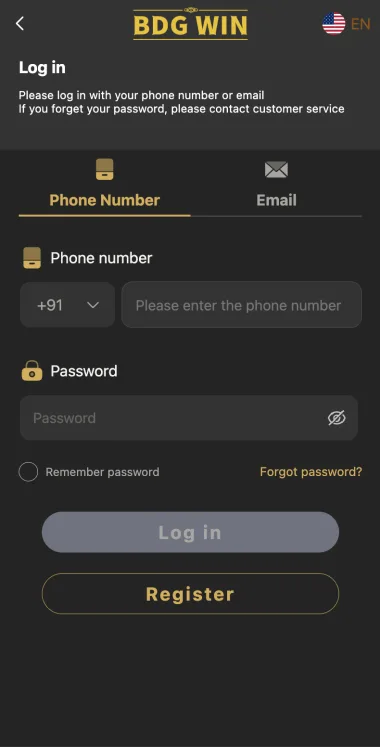
The external login destination linked here is https://bdgwin45.com/#/login. We cannot inspect its database or verify which methods are active for a particular person. If the current form differs from an image in an article, use its actual labels and ask the provider about account-specific options. Do not assume that every website using the BDG Win name supports the same identifiers or account relationship.
What phone login identifies
Phone login generally asks for the number associated with an account. The country code may be selected separately from the remaining digits. Read the labels carefully, particularly when +91 is already displayed. Entering the country code again can create a different input. Copying from a contact card may also bring spaces or punctuation that the current form does not expect.
Use the full number you registered, not just the number currently inserted into the phone. A new SIM, a second SIM or a device change does not necessarily update the external account record. On a dual-SIM device, it is possible to be using one number for calls while an account remains tied to the other. Check the original account details before assuming that a password is wrong.
A number is useful only while you can legitimately control the related contact channel. Borrowing a friend's number for registration can make later verification dependent on that friend. If a number is reassigned, ownership questions may require a provider review. Access to a currently active SIM is not permission to inspect an account that belongs to a previous number holder.
What email login identifies
Email login uses an address that the provider associates with the account. Check the complete spelling, domain and any accidental space. A small typing error can point towards a different identifier. Owning several mailboxes does not mean all of them are interchangeable for a service. The address you use for everyday messages may be different from the address recorded at registration.
If you used an email alias, check the exact address saved with the account rather than replacing it with another version you assume is equivalent. Email providers handle aliases and address variations in different ways, and an external service may store the literal value entered. Use the record you actually created. Do not build troubleshooting around a general rule about all email addresses.
You also need to retain access to the mailbox for recovery or account communication where the provider uses it. If that mailbox is unavailable, recover it through its own provider or ask about an alternative ownership process. Creating a new email account does not automatically replace the old contact details held by the gaming service. That change needs a documented account action.
A login identifier is not a recovery guarantee
A service can use an identifier to find an account while using a separate process to approve recovery. Do not assume that knowing the registered number or email proves ownership by itself. Those details may be visible in ordinary correspondence or known to other people. A provider may need further appropriate checks before changing a password or contact method.
Similarly, being able to receive a message does not resolve every ownership question. A recycled number, a shared mailbox or a compromised email can complicate the record. If the situation is unusual, explain it rather than trying to force a normal reset. We cannot determine ownership or tell a provider to accept a new identifier without its own review.
Keep the distinction clear in support requests. Say whether you can enter the identifier, whether the service finds the account, and whether you control the recovery destination. These are three useful facts. A request saying only that email does not work could mean a typo, an unlinked address, a missing message or a lost mailbox, each requiring a different response.
Switching tabs does not merge accounts
If a phone login fails, choosing email does not necessarily give access to the same record. It may locate a different account or none at all. Check whether the email was actually connected to the original account before treating a second failure as evidence of a wider outage. Two unsuccessful identifiers can simply mean that neither matched the account you intended.
Do not register separately under email just because the phone login is inconvenient. That may create an additional account with its own records and conditions. It does not automatically move earlier information. Provider terms may restrict duplicates as well. If the goal is recovering an existing account, keep that goal separate from creating a new one with a different contact method.
If both phone and email appear to work, confirm the account information after each sign-in before assuming they lead to the same record. Do not make changes to an unfamiliar account. A provider must explain whether identifiers are linked and how changes are handled. An independent article cannot infer that relationship from two similar-looking forms or from the fact that both accept a password.
Passwords and identifiers need to match
A password belongs to an account, not to the visible login tab in isolation. The correct password for one identifier may fail with another. Before resetting it, inspect the saved entry selected by your browser. A shared device may fill someone else's number or an obsolete email while inserting a password that belongs to a different record.
Check case and accidental spaces in the password privately if a visibility control is available. Do not send the password to a person offering to test both methods. If the current password is uncertain, use recovery for the identifier you know belongs to the account. Repeated guesses across several numbers and addresses can create confusion or a temporary restriction without establishing which record you are accessing.
After a successful reset, update the saved entry for the correct domain and identifier. Avoid replacing several unrelated entries just because their names contain BDG. A clear label should distinguish the actual destination and contact method. Keeping that record organised helps prevent the same mismatch when you later sign in from a replacement phone or a different browser.
Compare recovery dependence, not convenience alone
Phone-based recovery can depend on reception, SIM availability and continued control of the number. Email-based recovery can depend on mailbox access, filtering and the security of the email account. Neither option is automatically best for every person. Think about which contact method you can maintain and secure over time rather than choosing solely because one is easier to type today.
For a phone number you expect to change, learn the provider's update process before losing access. For a mailbox you rarely open, confirm that it still works and that you know how to recover it. A forgotten email password can become the real cause of a gaming-account problem. Treat contact maintenance as an ongoing task rather than something completed permanently at signup.
If additional authentication is offered by a service, evaluate it using that service's own settings. Do not assume the gaming account and mailbox provide the same features. A security method available for email may not exist on the external provider. Use what is actually offered and keep any recovery information appropriately protected instead of copying instructions from an unrelated platform.
Shared phones and family devices
A shared phone can contain several saved numbers, mailboxes and browser sessions. Before submitting a form, read the identifier and check whether an account is already open. A familiar home page does not prove that it is your account. If another person's record appears, sign out without inspecting or changing their information and start again using your own details.
Do not alter a family member's saved password entry to hold your identifier. That can cause both people to lose track of which account belongs to whom. Use a separate browser profile or another appropriate way to keep local records distinct. A private session can reduce persistence on the device, but it does not verify the provider or make an ineligible activity permitted.
When finished, use the actual logout control if available. Closing a tab may leave an active session. Consider whether the browser should remember the password on equipment you do not control. Account security is not only about whether phone or email is chosen; it also depends on who can later reopen the device and reuse a session that remains active.
Changed number, changed mailbox or new device
A new device is not necessarily an account change. If you still control the original identifier and password, the relevant task may simply be signing in on the replacement phone. Avoid registering again automatically. Check the domain and current login options, then use the existing record. If a verification step appears, confirm its destination before requesting a message.
A changed number or mailbox is different. Ask the provider how contact changes are approved and whether the old method must remain accessible during the process. Do not assume that editing a profile label updates every recovery route. Ask what completion looks like and keep the confirmation. We cannot verify that a change has propagated through an external account system.
If the old contact is lost, describe that ownership issue directly. Do not ask the new owner of an old number to forward private codes. Do not create an account under a borrowed email merely to get past a form. A genuine recovery solution needs to leave the account attached to information you legitimately control, with a clear record of any approved changes.
Common error messages need different interpretations
An invalid-format message points towards the entered value or current field requirements. An account-not-found message may involve the wrong identifier or destination. An incorrect-password message concerns the attempted account-password combination. Do not treat all three as evidence that one sign-in method is inherently broken. Read the exact message and address the most direct possibility first.
A missing OTP is another category. Check the destination, reception or mailbox filtering and any resend instruction. We cannot promise a delivery time or code lifetime for the provider. Multiple rapid requests can leave you uncertain which message belongs to which attempt. Keep the sequence clear instead of switching back and forth between phone and email while several codes are outstanding.
If a waiting or restriction message appears, follow the current instruction and stop repeated attempts. Changing identifiers to evade a restriction does not explain or resolve it. Request a written clarification through a verified provider route where needed. Preserve the error wording, time and destination without sharing passwords or complete recovery messages as part of the evidence.
Privacy questions for each contact method
A phone number and an email address can both be personal information. Before registering or adding a contact method, read who controls the data and how it will be used. Ask whether marketing preferences are separate from essential account communication. Do not assume that one method is anonymous merely because it reveals less of your name in the login form.
Consider the wider record you are creating. An email address reused publicly across many services can link activities, while a phone number may already be known to contacts. The appropriate choice depends on your circumstances and the provider's actual practices. This article cannot guarantee privacy from a particular identifier. Read the relevant privacy terms and avoid sharing more information than the process legitimately requires.
The privacy policy of bdgwinapk.in.net concerns our website, not every external service linked from it. The provider controls the form at its own destination. An affiliate relationship does not merge the two organisations or give us access to your account. You do not need to send either identifier to Rohit Kumar merely to ask an editorial question about this comparison.
Two hypothetical examples of identifier confusion
In one example, a person registered with a phone number but later tries the email they use for all ordinary correspondence. The form cannot find an account. The useful next step is to check the original registration record, not to conclude that email login is defective. If the mailbox was never linked, the error is consistent with an identifier mismatch rather than a failed password.
In another example, a person owns two email addresses and the password manager fills the older one. They reset a password using the newer address, then return to a form still filled with the older address. The next rejection can appear mysterious until the identifiers are compared. Keeping the reset confirmation and login entry aligned resolves the logical confusion before any further technical action is considered.
These examples are explanatory situations, not claims of personal tests or access to reader accounts. Their purpose is to show what evidence matters. In each case, the important facts are the actual domain, the identifier associated with the record and the sequence of actions. A generic comparison saying that phone is faster or email is safer would not answer the specific problem.
Ask the provider a precise linking question
If you want to know whether phone and email can be used for the same account, ask that directly. State which method originally created the record and whether you can currently access it. Ask whether an additional identifier can be added, what verification is required and how completion will be confirmed. Do not assume a field exists simply because another website has one.
If the answer includes an identity check, verify the submission route before sending documents. A public Telegram group is not an appropriate place for full personal records. Keep the request limited and clear. You can ask what is needed without providing a password, OTP or banking credential. A support ticket reference can be shared more safely than a recovery token.
Record the answer in relation to the correct domain. A statement about one provider should not automatically be applied to another similarly named service. If the process is unclear, pause rather than creating a second account to test an assumption. The goal is a documented account relationship, not simply two forms that happen to accept information without explaining where it is stored.
Choose a method you can maintain responsibly
The practical answer is to use the identifier that genuinely belongs to the existing account and that you can continue to control. If both are valid, consider access, recovery and privacy together. Convenience matters, but it should not override ownership or a clear record. There is no universal winner that can be declared without knowing the provider's actual features and your own contact situation.
Check current eligibility and applicable rules separately from the technical ability to log in. A working phone or email does not establish that every offered activity is permitted in India. MeitY publishes authoritative online gaming material, and a VPN or borrowed identity does not resolve a restriction. This page compares account identifiers, not legal permission or the financial reliability of an external operator.
For article corrections, contact Rohit Kumar at [email protected] with the page address and the wording to review. Do not include private login details. We cannot link your identifiers, transfer an account or confirm which recovery method the provider currently accepts. Those actions require a verified process controlled by the organisation holding the actual account record.
A contact-method record that stays useful
Keep a private note of the account domain and which identifier is active. If a contact update was approved, record the date and keep the confirmation separately from the password. This avoids relying on memory when you next change phones. The note should explain the relationship without exposing credentials: for example, the account uses a particular mailbox and the phone update is still pending.
Review that note after a confirmed change. An outdated local record can keep causing login failures long after the provider updated its own system. At the same time, do not remove an old contact method from your records until you understand whether it is still relevant to an unresolved complaint. Keep evidence and active credentials organised for different purposes rather than deleting everything together.
If you no longer want the account, phone versus email may no longer be the most important question. Ask about closure and how confirmation will be sent. A request to stop marketing messages is separate from deleting a mailbox or cancelling a SIM. Keep access to the contact method needed for the closure process until the outcome is clear, where possible.
If you receive an unexpected message after a contact change, verify its purpose independently. It may concern an older request, an unrelated service or a suspicious attempt. Do not enter a code simply because the message mentions the identifier you recently changed. Match the action, destination and timing to a request you deliberately made. If those details do not align, pause and investigate through a route you already trust.
The same discipline applies when helping a family member understand a form. You can explain the difference between identifiers without taking possession of their password or recovery messages. Let the account holder enter sensitive information themselves. Clear boundaries make practical help more useful and prevent an innocent explanation from creating shared credentials that neither person can later manage confidently.
Do not mistake a label for a linked identifier
A profile may display a name or contact label without explaining whether it can be used for login. Ask the provider what the field actually controls before relying on it. Display information, recovery contact and sign-in identifier can serve different functions. The current account process must establish their relationship; the presence of an email-shaped value alone does not answer that question.
Frequently asked questions
Can I use any email with a phone-registered account?
Not necessarily. The provider must associate the email with that account. Check its documented linking process.
Is phone login better than email login?
Use the identifier attached to the account and a contact method you can maintain securely. Neither is universally better.
Does changing my SIM change the account number?
No automatic change should be assumed. Follow the provider's contact-update process.