
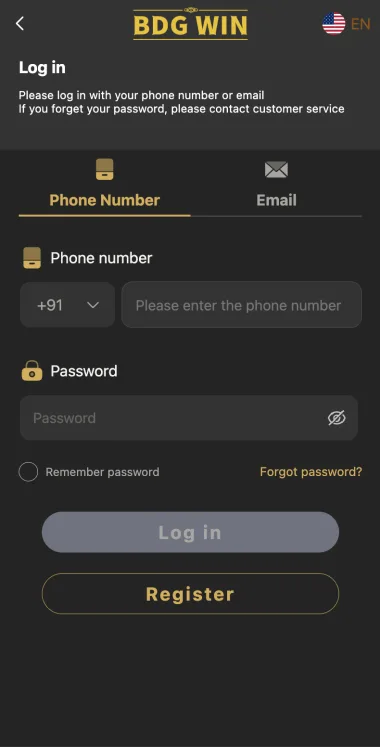
Begin at the login page you intended to use
The login destination linked by our website is https://bdgwin45.com/#/login. Open it deliberately and inspect the address before looking for password recovery. A reset link received unexpectedly in a chat is a different starting point. You should know which website you are trying to recover and which account identifier belongs to it before entering a phone number or email.
Look for the recovery control available on the current page. Its wording may be Forgot password or something similar. This article does not promise that a particular button remains available on every version of the provider's website or app. If the form changes, follow the current written instructions and stop if they request information that does not make sense for an account reset.
A similar name does not prove a shared account system. If you originally registered elsewhere, check your own records before assuming that this destination holds the account. An account-not-found message on the wrong website is not solved by repeatedly changing the password. Confirm the original domain using your password manager entry, saved correspondence or other records that you already trust.
Identify what you have actually forgotten
Sometimes the password is not the missing piece. You may remember the password but be using an old number, a different mailbox or a phone registration in an email tab. Before resetting anything, check the phone number or email. This is particularly important when a browser has several saved entries with similar names. Selecting the wrong entry can create a false impression that the password has suddenly stopped working.
If you know the phone number or email but are uncertain about the password, recovery is a sensible next step. Do not make a long list of guesses from passwords used on other websites. That approach risks exposing reused login details and may trigger a restriction. A reset should replace the uncertain password with a new, unique one rather than helping you reconstruct a weak pattern.
If you cannot identify the account at all, collect the records you have before contacting support. Note approximate registration time, the domain and the contact method you controlled then. Do not send an unfiltered archive of messages. Start with a clear explanation and ask what limited information is needed through a verified route. The provider, not an independent publisher, must decide how account ownership is established.
Check the recovery destination before requesting a code
A recovery form may display a masked phone number or email address. Read whatever is visible carefully. If it does not match a contact method you control, do not keep requesting codes. The mismatch may involve the wrong account or outdated details. A code sent to someone else's number cannot be safely retrieved by asking that person to forward it in a public conversation.
When entering a number yourself, check the country code and the remaining digits. When entering an email, inspect the spelling and any space added by copying. A small input mistake can send a request towards a different destination. Correct the phone number or email at the beginning rather than treating every delivery problem as a failure of the mobile network or email provider.
If the old contact method is no longer available, look for a documented alternative recovery process. Do not pretend that you still control it or use another person's identity to pass a check. Ask whether the provider can review an ownership issue and how that review works. There may be no immediate self-service solution, and this website cannot override that limitation.
Missing SMS codes need a calm check
If an SMS does not arrive, first check whether your phone can receive ordinary messages and whether the relevant SIM is active. On a dual-SIM phone, make sure you are monitoring the number connected to the account. A data connection can work while a particular SIM has a separate reception or service problem. Distinguishing those conditions avoids troubleshooting the wrong connection.
Read the page's resend instruction before making another request. We do not publish a guaranteed delivery time because it depends on systems we do not control. Repeatedly requesting codes can produce a confusing sequence of messages arriving out of order. Keep track of the most recent deliberate request and follow its instructions rather than entering every code that appears.
Check the message filtering available on your device. A relevant message may be grouped differently from ordinary personal conversations. Do not install a new SMS-reading app or grant unrelated permissions simply to search for a code. Use the tools already available on the phone, and keep the content private. A screenshot showing the entire code should not be posted to a group for diagnosis.
If recovery uses email
Check the mailbox associated with the account, including its spam or filtered folders. Search for messages around the time of your request, but verify the sender and destination before opening a reset link. A message appearing near a real request may still be unrelated. If the email gives a domain you do not recognise, return to the independently opened login page rather than trusting the email by timing alone.
Some mailboxes have forwarding rules, storage limits or synchronisation problems. Check whether new ordinary email arrives before blaming the account service. If you discover unfamiliar forwarding or security changes, secure the mailbox through its own provider. Recovery messages can grant access, so a compromised mailbox creates a separate problem that changing the gaming account password alone may not resolve.
Do not reply with your existing password or send the reset link to a stranger. A link may contain a private token even when no numeric code is visible. Treat it as sensitive account information. If you need editorial help understanding this article, describe the wording without including the full link, its private parameters or the personal details contained in the message.
An OTP is not an ordinary support reference
An OTP is intended for a particular authentication or verification step. It is different from a support ticket number that you can quote to identify a conversation. The distinction matters when someone asks for the code over a call. A person who says they need it to locate your case may actually be asking for information that can authorise account access.
Enter a code only in the flow you opened for the action you intended. Read the message to understand what that action is. A code referring to a payment, a different account or another service should not be used as if it were a harmless password reset. Stop if the purpose does not match your request and check the relevant service independently.
Knowing your phone number or account name does not prove that a caller is genuine. Those details may be available from earlier conversations or data exposure. You do not need to persuade the caller to accept your concern. End the exchange and contact the organisation through a route you locate independently. Keep the suspicious message if you need to report it later.
When a code is rejected
Check for a copying error, an accidental space or a code taken from an older request. Read any instructions about which request is current. We cannot verify the provider's code lifetime or whether a resend invalidates an earlier message. Follow the current page and message rather than assuming that a timing rule quoted for another website applies here.
If the code is repeatedly rejected despite careful entry, keep the error wording and the time of the latest request. Avoid sending the code to support as evidence. You can explain that a recently requested code was rejected without disclosing its value. A redacted image of the error may help if a verified support channel asks for it.
Do not change the phone clock, install an unknown APK or make a payment merely because a chat message says that will fix the code. These actions do not establish why the verification failed. If the provider's own instructions cannot resolve it, ask for a documented alternative. Be prepared to pause instead of trying a sequence of unverified fixes that introduces new risks.
Choose the new password carefully
When the reset reaches the password stage, read the actual requirements. Create a password unique to this account and save it in a trusted password manager. Do not reuse the password that protects your email or banking access. If a password visibility control is available, inspect the entry privately so that a simple keyboard error does not create another recovery cycle.
If confirmation is required, the two entries must match exactly. Pay attention to case and symbols. Copying from an insecure note may introduce an unwanted space or expose the password through clipboard history on a shared device. Use a method you understand and control. Do not ask a stranger to generate the password and then send it to you in a chat.
After saving, wait for a clear response before assuming success. A form still displaying an error has not necessarily completed the reset. Keep the confirmation wording without including the password. If the page fails at this point, note the sequence of events and avoid immediately repeating the entire process with several different passwords. You need to know which attempt, if any, was accepted.
If the new password still does not work
An old saved entry may be filling the password field even after a successful reset. Check which value your password manager selected and whether it belongs to the same domain. Update the correct entry once you are confident that the new password was accepted. Avoid deleting every saved account entry, since some may belong to different websites and still be valid.
Also check the phone number or email again. A new password set for one phone number will not necessarily work with a different email or another account. Password reset and login need to refer to the same record. Read the masked contact information and any confirmation you received rather than relying on the general BDG Win name shown at the top of a page.
If the current password is rejected with the correct identifier, capture the exact error without exposing the entry. The issue may require provider review. Do not assume that another registration will reconnect the original record. Explain that the reset showed success but a subsequent login failed, including times and the destination address. That sequence is more informative than simply saying the password is wrong.
Lost phone, changed number or unavailable mailbox
If the device was lost but the number is still yours, contact the mobile provider about securing or replacing the SIM. Use the device manufacturer's lost-device options where available. Protecting the number and device comes before responding to random recovery offers. Someone offering a rapid fix in a public group cannot establish ownership of the missing phone on your behalf.
If the number has permanently changed, ask the account provider about updating it through an ownership review. Do not ask the new holder of an old number to share verification codes. The account may contain private information, and the other person should not be drawn into a recovery attempt they do not understand. Use a formal process rather than informal access to someone else's messages.
For an unavailable mailbox, first try its own recovery process. Keep the account provider informed if that affects recovery, but do not assume that an alternative email you have just created will be accepted automatically. A change to recovery details needs appropriate verification. We cannot establish ownership, transfer an account or receive verification documents for that purpose.
A compromised account needs more than a reset
If you suspect another person accessed the account, keep a record of unfamiliar changes and messages. Resetting the password may be useful, but review the recovery details and any available session controls too. An attacker who still controls a mailbox or phone number may be able to start another reset. Address the contact method as well as the account password.
Check other accounts that used the same password and replace those passwords independently. Use the legitimate website or app for each service. Do not follow a single chat link claiming to secure everything at once. Keep your response proportionate to the evidence, and avoid granting remote access to someone who says they will examine all of your accounts for you.
If you notice financial loss or an unauthorised transaction, contact the relevant bank or payment provider promptly and use official reporting channels where appropriate. The National Cybercrime Reporting Portal provides a government route in India. Preserve original records and reference numbers. A provider password reset is not a financial dispute report, so treat those as separate tasks with their own evidence.
Prepare a useful recovery request
A clear request states that you are trying to recover an existing account, identifies the website, and explains which stage failed. For example, you can say that the form accepted your number but no message arrived, or that a reset completed but login still failed. Include the approximate time, device and browser if relevant. Leave out the password and OTP.
Ask for the specific next step and a reference number if the process supports one. If identity evidence is required, ask what is necessary and how to submit it securely before sending documents. A public Telegram channel is not an appropriate place for an unredacted identity card. Do not send more information than the verified process requires simply to make a message look convincing.
Keep one chronological record of replies. Note any deadline or promised follow-up, but do not invent a response time if none is given. If a person demands a transfer to a personal account to release a password, preserve that request and verify the contact independently. Account recovery should not be confused with an unverified payment arrangement made in a private chat.
Avoid a second account as a recovery shortcut
A fresh signup can feel easier than recovering an old account, but it creates a different record. It does not automatically bring back the earlier contact details, transaction history or other account information. Provider terms may also restrict duplicate accounts. If your aim is to regain an existing account, keep that aim clear and resolve its ownership or access issue directly.
Do not use a friend's number because your own number is rejected. That can place future recovery messages under someone else's control and complicate the record further. A borrowed identity can also create serious verification problems. A practical solution must leave you with an account you legitimately control, not merely a temporary session that works until another check appears.
If you no longer want the old account, ask about closure rather than silently abandoning it while creating another. Closure, privacy requests and unresolved transactions may need separate handling. Keep copies of any confirmation. Uninstalling an app or clearing browser data removes local access but does not necessarily remove the provider's account record or its legally required retained information.
Keep a recovery record without storing secrets
A useful private note records the date, website, identifier type, error and action taken. It can say that a reset was completed successfully without storing the password itself. Save any support reference with the same timeline. This prevents repeated attempts caused by uncertainty about what happened, while leaving passwords in a tool designed to protect them.
Do not keep every OTP indefinitely. Codes and reset links are temporary login details, not general reference material. If an image is needed to show an error, redact the login detail before sharing a copy. Keep unrelated personal messages out of it. A concise, safe record is easier to understand and less likely to reveal information that another person could use.
Once recovery is complete, review the saved account entry and remove obsolete information carefully. Make sure the correct domain and identifier are recorded. If you received conflicting instructions during the process, retain the relevant correspondence privately in case a question returns. The goal is a stable account record that you understand, rather than a collection of nearly identical passwords and unexplained messages.
Know the limits of independent recovery information
This page explains common recovery situations but cannot see the provider's delivery systems or account database. It cannot confirm whether a code was sent, override a restriction or approve a change of phone number. Those decisions belong to the organisation controlling the account. Treat any independent website that promises direct administrative access with particular caution unless that relationship can be established.
Rohit Kumar publishes this information at bdgwinapk.in.net. You can report a factual error to [email protected], but do not send passwords, codes, reset links or identity documents. A correction request should identify the article and the wording that needs attention. Account recovery requests should go through a verified provider process rather than our editorial inbox.
If the process remains unclear, pausing is a valid next step. You are not required to keep submitting personal information until a form responds. Preserve the facts, verify the destination and ask for a written explanation. A careful recovery attempt protects the account you are trying to regain; it should not create a larger problem involving a compromised mailbox, an unknown app or an additional payment.
A final check before closing the recovery request
If access has returned, check whether the original problem has actually been resolved. Opening an account once is different from confirming that the correct recovery details are recorded. Review the phone number or email and any settings you are able to inspect. If the issue involved a lost number or suspicious change, ask whether that change has been addressed rather than assuming the password reset completed every part of the request.
Keep a copy of the final provider reply and note any remaining issue in plain language. For example, access may be restored while a transaction dispute remains open. Do not mark that separate dispute resolved simply because login now works. A clear record should show both what was fixed and what still needs attention, without merging unrelated questions into one general statement that everything is fine.
You can then stop making recovery requests. Further unsolicited reset messages should be treated as new events rather than instructions to repeat the completed process. If one arrives, do not share it and check the relevant account independently. You have a reason to investigate an unexpected message, but no obligation to follow the link it contains.
Frequently asked questions
What should I do if the BDG Win OTP does not arrive?
Check the account identifier, delivery destination, reception or mailbox filtering, and the current resend instruction. Do not share codes or make repeated requests without understanding which attempt is active.
Can I recover an account without the old number?
That depends on the provider's documented ownership review. We cannot transfer accounts or guarantee an alternative recovery method.
Should support ask for my password?
Do not send a password, OTP or complete reset link to a person in a chat. Use a verified recovery flow and disclose only the information it legitimately requires.