
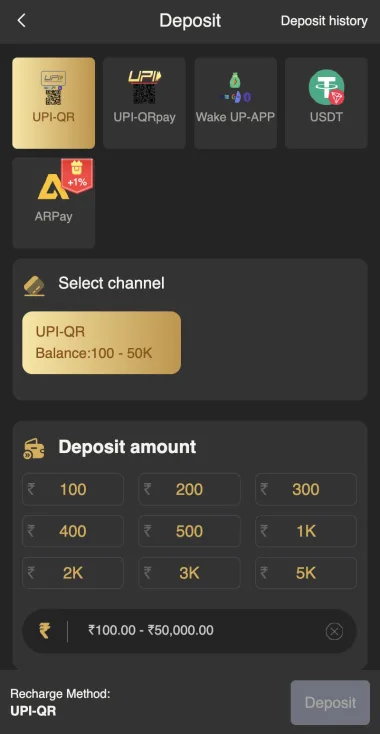
What a deposit record actually tells you
In account language, a deposit usually means a payment intended to add funds to a balance. The useful questions are more precise: was a payment request created, did the bank debit money, did the recipient receive it, and did the account record a credit? A single green tick cannot answer all four questions. Equally, an unchanged account balance does not tell you exactly where a payment stopped.
Start by identifying the record you are reading. A bank entry belongs to your banking history. A transaction in a UPI app belongs to that payment service. An order number belongs to the website or app that created the order. A balance belongs to the account ledger. Keeping those records separate prevents a common mistake: sending a website order number to a bank and expecting it to function as a bank transaction reference.
If you have not paid and only want to understand the terminology, there is no need to create a transaction for testing. A payment label is not a recommendation, and an available form is not evidence that the underlying activity is suitable or lawful for you.
Read the bank record before the account balance
Open your own bank or payment app through its normal entry point. Find the individual transaction rather than relying only on the total balance. A balance can change for several reasons, including other payments, reversals and holds. The transaction entry gives a clearer starting point because it normally has its own date, amount, recipient and status.
Write down the details exactly as they appear. If the status changes later, retain both observations with the time you checked. Do not edit an older note to make it match the newer status; the change itself may explain the problem. A simple timeline can show that the bank first marked a payment pending and later marked it successful, while the account remained unchanged throughout.
Be careful with names. The name shown beside a payment may be a recipient account name rather than the name of a game brand. Do not assume they are the same legal entity. If the recipient is unfamiliar, record it privately and ask your bank to explain the payment record. Avoid posting the complete details in public comments or large chat groups.
Pending, failed, successful and reversed are different states
A pending entry means the transaction does not yet have the final result shown by that service. A failed entry indicates that the service did not complete the transaction as intended. A successful bank payment describes the transfer recorded by the payment system; it does not by itself confirm that a separate website added the correct credit. A reversal is a later movement returning funds, which should have its own traceable entry.
The same words can be used differently in different products. Read the explanation attached to the transaction and ask the organisation responsible for that record if it is unclear. Do not substitute an internet article's estimated timing for the instructions tied to your own complaint. A general banking explanation also cannot establish a particular operator's processing policy.
The most useful description is factual: the bank shows a debit on a stated date, the payment app shows a stated status, and the account history shows either a matching credit or no matching entry. This gives a support team something to investigate without forcing you to guess whether the bank, recipient or account system caused the discrepancy.
Build one clear transaction timeline
A timeline does not have to be complicated. Begin with the moment you first noticed the problem. Add the payment time from the bank record, the time the account order was created if visible, and the time of each support response. Use one time zone throughout. If one record uses a different time zone, keep the original value and label it rather than silently changing it.
Include the device or browser only when it helps explain the issue. For example, a page that stopped loading after a payment is relevant. The colour of the page, unrelated game activity and general frustration are less useful than a precise account of what happened. Keep opinion and evidence in separate sentences so that the facts remain easy to follow.
A good timeline might say that the payment was debited, the order continued to show pending, the page was reopened without creating another payment, and a complaint was submitted with the reference attached. This is clearer than sending ten disconnected messages. It also helps you avoid repeating the same payment because the first one appears to have disappeared.
Save enough evidence without exposing your account
Retain a private copy of the bank transaction detail, the corresponding account history and any complaint acknowledgement. Preserve the original files when possible. If you need to share a copy, crop or redact unrelated entries, full account numbers, available balances and personal conversations. A useful complaint does not require handing over your entire financial history.
Never include a password, one-time password, UPI PIN, card security code or recovery code. Those are authentication secrets, not payment evidence. A person who claims that a PIN is needed to trace a transfer is asking for something different from a transaction reference. Stop and verify the request through your bank's established channel.
Check an attachment before sending it. A screenshot may reveal a phone notification, another person's number or a login token in the address bar. A short screen recording can reveal even more than intended. Prefer the smallest relevant piece of evidence, with the original retained privately. If an official institution needs a full document, use its secure submission route rather than an unsolicited chat link.
Match a website order with a payment reference
An account order and a bank reference may look similar because both contain long strings of numbers. They are not interchangeable. Label each one in your notes: website order ID, bank transaction ID, UPI reference or complaint reference. If the service does not name a field clearly, quote its label rather than inventing a meaning for it.
Compare the date and amount as well as the phone number or email. Two payments for the same amount can occur close together, so an amount match alone is weak evidence. If there are multiple attempts, make a separate row for each. Do not combine them into one larger total unless you also preserve the individual entries. A support team needs to distinguish a duplicate debit from a single debit linked to the wrong order.
Where a payment entry provides a downloadable receipt, keep it with the related order record. If you cannot identify a matching order, say that directly. You can still report a bank debit without pretending to know which account request it belongs to. Honest uncertainty is more useful than an incorrect match that sends an investigation in the wrong direction.
When the bank shows a debit but no account credit appears
First establish whether the payment record is final or still changing. Then inspect the account history for the exact amount and date. A missing balance update and a missing history entry are different observations. The history might show a credit that the front page has not refreshed, or it might contain no matching credit at all.
You can reopen a page or sign in through a familiar route to see the latest information, provided you keep your evidence. Repeatedly submitting payment requests is not a troubleshooting step. It creates more transactions and can make the original discrepancy harder to follow. Do not send a second payment because a chat contact says it will activate, validate or unlock the first one.
Send a concise request to the verified organisation responsible for the account record. Explain the discrepancy and ask for a written outcome tied to the order and payment reference. In parallel, use your bank or payment app's complaint process for the payment itself. These are separate enquiries, and one organisation's ticket number does not automatically mean the other organisation has received a complaint.
When a payment fails or a reversal is expected
A failure message is not enough to establish whether money left your account. Check the bank entry. If there is no debit, keep the failed request record in case a later entry appears. If there is a debit, ask the bank or payment provider how that specific transaction is classified and how to track any reversal. Do not infer a return date from a promotional message or someone else's experience.
If you are told funds were reversed, look for the corresponding bank credit. Ask for the reference that connects the reversal to the original debit. A screenshot saying refunded inside a website is not the same thing as a credit in your bank history. Conversely, a bank credit may arrive with wording that differs from the original recipient name, so compare identifiers and ask the bank when uncertain.
Keep the complaint open until the organisation explains the result or the money movement is independently visible. Closing a chat window does not settle the financial issue. If a complaint is marked resolved without an understandable explanation, preserve that response and follow the published escalation route rather than starting an unrelated conversation with a new anonymous contact.
Use bank and payment-app complaints for payment issues
NPCI's UPI information directs users to participating bank or payment-app channels for transaction grievances. Its complaint facility also distinguishes payment-system enquiries from complaints about fraudulent or unauthorised transactions, which should be raised with the relevant bank. These routes concern the payment record; they do not certify a gaming operator or guarantee a commercial dispute will be resolved in your favour.
When raising a complaint, select the reason that matches the facts. A payment you authorised but did not receive account credit for is not automatically an unauthorised transaction. A payment you did not make is a different issue. Choosing an inaccurate category can delay the response and weaken the clarity of your own record.
Save the acknowledgement, complaint number and stated next step. If the bank requests additional information, provide it through the bank's authenticated channel. Avoid following a link sent by a person who contacted you after seeing a public complaint. Searching social media for a fast support number can lead to an impersonator who knows enough about your issue to sound convincing.
Recognise requests that make a payment problem worse
Extra payments to release an earlier payment are a reason to pause. So are requests to install remote-control software, share a live phone display, transfer money to a personal account or approve an unexpected collect request. These actions do not become ordinary troubleshooting simply because the sender uses a logo or knows your order number.
A person may describe an additional charge as tax, verification, security, anti-fraud clearance or account activation. Ask for the written basis and verify it independently. Do not treat urgency as proof. Pressure to act before a countdown expires is especially unhelpful when the original issue has not been explained. You are entitled to keep a record and consult your bank without being rushed.
If you suspect a financial cybercrime in India, contact your bank promptly and use the National Cybercrime Reporting Portal or the financial-fraud reporting number 1930. Preserve the transaction details and communications. Reporting is a request for investigation, not a promise of recovery. Do not pay a separate recovery agent who guarantees that a complaint can be accelerated or that lost money can certainly be retrieved.
How to write a useful missing-credit complaint
Use a subject that identifies the issue, such as payment debited but account credit missing. In the first paragraph, state the date, amount, account order identifier and payment reference. In the second, describe the mismatch between the bank record and account history. Ask for the current status and a written explanation of the next step. Keep your tone firm and readable.
Attach only the relevant redacted evidence. You can add that original records are available through a secure route if required. Do not include a password as proof that the account belongs to you. An organisation should use its normal authentication or verification process. If a representative requests information that seems unrelated to the transaction, ask why it is needed and how it will be protected.
Keep one main thread for the issue and quote the complaint reference in follow-ups. Repeated new tickets can split the evidence across conversations. If you escalate, carry forward the original reference and the earlier response. A clean record gives the next person a fair chance to understand the case without making you reconstruct the entire history from memory.
Separate access problems from payment problems
Sometimes an account cannot be opened while a payment is also unresolved. Keep those issues connected in your notes but separate in your requests. A login problem may stop you viewing history, yet it does not erase the payment entry in your bank. You can still document the debit and contact the bank without first regaining access to the website.
For account access, use a familiar login address and the service's established recovery options. Do not create a second account merely to contact someone if doing so could confuse ownership records. Do not assume that a new domain found in a chat is an authorised replacement. A similar name and matching colour scheme do not establish control by the same organisation.
If the account becomes accessible again, save the relevant history immediately and compare it with your earlier notes. Record any change in the order status or balance without assuming the change resolves everything. A visible balance is not a bank refund, and restoring a login does not prove that a pending payment has reached its intended destination.
What we can and cannot help with
BDG Win APK is an independent publication. It can explain terms, link to public payment information and correct an error in an article. It cannot view a private bank transfer, change a platform ledger, approve a refund or speak for a payment recipient. Sending money or login details to we cannot solve an account-credit problem.
For an editorial correction, contact Rohit Kumar at [email protected] with the page address and a short explanation. Remove personal financial details from the message. If an article describes a label that has changed, a cropped example can help explain the correction, but the original private transaction should remain with you and the organisation responsible for investigating it.
Related topics have different purposes. The withdrawal article explains outgoing account requests and bank credits. The customer-support information explains how to assess a contact and keep a complaint record. The India article provides the legal context for money-game claims. Reading the relevant topic is more useful than repeating the same payment question across several unrelated pages.
Keep a small reconciliation table
A simple reconciliation table can bring the evidence together without mixing the different records. Use columns for the payment date, amount, bank reference, website order, bank status, account status and complaint reference. Give every attempt its own row, including a failed attempt that produced no debit. This makes a duplicate payment easier to distinguish from a duplicate display of the same transaction.
Use plain observations in the cells. Write no matching credit found rather than lost, and write reference not provided rather than fake transfer unless you have evidence for the stronger claim. You can add a separate notes column for questions that remain unanswered. This preserves the difference between what the records show and what you suspect may have happened.
When a new response arrives, add its date and the change it explains. Do not erase the previous entry. If you share the table, remove personal information and include only the rows relevant to the complaint. The table is an index to your original evidence, not a replacement for it. Keep the bank receipt and account record alongside it so a reviewer can check the details. This small amount of organisation can save considerable confusion when a case passes between a payment provider, a bank and the organisation responsible for an account ledger.
A practical checklist before you close the issue
Review the evidence one last time. Can you explain whether the bank debit remains, whether any reversal appeared, whether the account history changed and what each organisation said? If the answer is unclear, the issue may still need a written explanation. A closed ticket is an administrative status; it is not a substitute for understanding the financial result.
Retain your records in a private folder with a sensible date-based filename. Include the original transaction, redacted copies you sent, complaint references and final responses. Avoid uploading them to a public drive or sharing an unrestricted folder link. Delete unnecessary duplicate copies from messaging apps once you have safely retained what you need, especially if those copies expose personal information.
The goal is not to keep checking a balance indefinitely. It is to reach an evidenced outcome or know the next formal route for the unresolved issue. Clear records reduce uncertainty, help you describe what remains wrong and protect you from people offering shortcuts that require more money or more access to your phone.
Frequently asked questions
Does a successful UPI payment prove my BDG Win balance was credited?
No. The bank or payment record and the account ledger are separate records. Compare the payment reference, amount and date with the account history and ask for an explanation if they do not match.
Should I make another deposit to fix missing credit?
No. Another payment creates a separate transaction and does not establish what happened to the first. Document the original debit and use verified complaint channels.
What details are useful for a missing-credit complaint?
Keep the transaction date, amount, recipient, bank or UPI reference, account order ID and current statuses. Redact unrelated information and never share authentication secrets.
Can this website trace or refund a payment?
No. Our website has no access to bank records or an operator account ledger. Payment enquiries belong with your bank or payment provider, and account-record questions belong with a verified operator contact.
Is there a guaranteed deposit or refund processing time?
Our website has no verified current BDG Win processing policy. Ask the responsible organisation about your specific transaction and save its written response.